

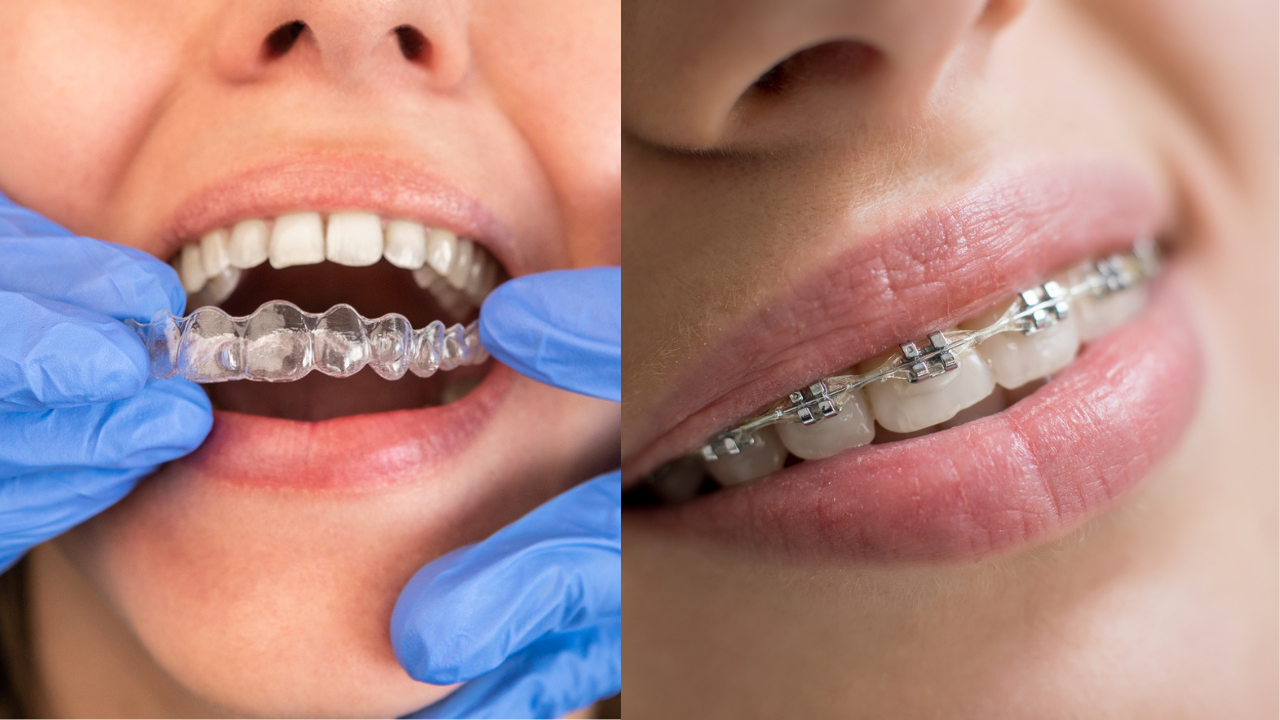
Thinking about straightening your teeth but not sure whether to go with clear aligners or traditional metal braces? You're not alone. It's one of the most common questions patients ask when looking for teeth straightening treatments. The honest answer? It really depends entirely on you.
Both options work; both clear aligners and metal braces have their advantages and trade-offs. So the best choice isn't always the most expensive one, neither is it the one your friend recommended, nor the one you've seen advertised most.
Keep on reading to learn more about these options and compare them side by side, so you get a sense of what to expect when you walk into your next consultation. Let’s break it down for you.
What's the Actual Difference Between Clear Aligners and Braces?
Before we get into comparing their benefits and disadvantages, you ought to understand what each treatment actually is.
What Are Metal Braces?
Metal braces consist of stainless steel brackets that are bonded directly to your teeth and connected by a thin metal wire. Your dentist tightens the wire at regular intervals, typically every four to six weeks, applying gradual pressure to shift your teeth over time. They are fixed: they stay on your teeth for the entire duration of treatment.
What Are Clear Aligners?
Clear aligners (sometimes called invisible braces) are a series of custom-made, removable plastic trays that fit snugly over your teeth. Each tray is designed to move your teeth incrementally, and you swap to a new tray roughly every one to two weeks. Because they're removable, you take them out to eat, brush, and floss.
Both approaches use the same fundamental principle: sustained, controlled pressure on teeth to stimulate bone remodelling and gradual tooth movement. The difference is how that pressure is applied, and what that means for your daily life.
Aligners vs Braces: A Side-by-Side Comparison
Where Braces Have the Clear Edge
It's tempting to frame aligners as the modern upgrade and braces as the old-fashioned option. That framing is misleading. For many patients, metal braces are genuinely the better clinical choice. Here's why.
Braces Handle Complex Cases that Aligners Cannot
Metal braces give your dentist precise, three-dimensional control over every tooth including rotation, torque, and root positioning. For patients with severe crowding, significant bite problems (underbite, overbite, crossbite), or teeth that need to be moved in complicated ways, braces remain the more reliable and predictable option. Aligners have limitations in these scenarios, particularly around extreme rotations and root movement.
Braces Work Continuously Without Depending on You
Braces apply constant pressure 24 hours a day, seven days a week. They don't rely on your discipline or memory. This matters more than many patients realise. Clear aligners only work when they're in your mouth. If you're consistently leaving them out for four, five, or six hours a day (which happens more than most patients admit) your treatment will stall, cost you more time, and potentially cost you more money.
Braces Are More Affordable
In Malaysia, metal braces at private clinics typically range from RM 4,000 to RM 7,000, significantly lower than clear aligners, which start around RM 5,500 and can exceed RM 20,000 for premium brands like Invisalign. For patients on a tighter budget, the cost difference is a meaningful factor.
Better for Younger Patients Who Misplace Trays
For teenagers who aren't ready for the responsibility of managing removable appliances, braces are often the more practical choice. A misplaced or forgotten aligner tray doesn't just cause frustration, it can set treatment back by weeks.
Where Clear Aligners Have the Clear Edge
That said, for the right patient, clear aligners offer advantages that braces genuinely can't match.
Clear Aligner Provide Aesthetics During Treatment
This is the main reason most adults choose aligners. The trays are virtually invisible: made from clear, medical-grade plastic that fits flush against your teeth. For working professionals, university students, or anyone who regularly speaks in front of people, the difference between aligners and a mouth full of metal is significant.
Clear Aligners Need No Dietary Restrictions Whatsoever
Remove your trays, eat whatever you like, rinse, and replace. There's no list of forbidden foods. No worrying about curry getting into your brackets, biting into an apple, or eating a piece of sugarcane.
Easier to Maintain Good Oral Hygiene with Clear Aligners
Because you remove aligners to brush and floss, your teeth cleaning routine stays exactly the same as before treatment. With braces, food routinely gets trapped around brackets and wires, which increases the risk of plaque buildup, decalcification (white spots on enamel), and gum inflammation if brushing isn't meticulous.
Clear Aligners are More Comfortable Daily
Smooth plastic edges mean no ulcers from brackets cutting into the inside of your cheeks. After switching to a new tray, there's typically mild pressure for a day or two — but most patients find this noticeably less uncomfortable than the soreness that follows a wire tightening appointment.
Aligners Need Fewer Clinic Visits
Aligner treatment generally requires less frequent check-ups, which is useful if your schedule is packed or if getting to a dental clinic takes planning.
The One Thing Most People Don't Tell You About Aligners
To put it plainly: clear aligners only work if you wear them.
This sounds obvious, but it's the single most underappreciated factor in choosing between the two options. Aligners must be worn for 20 to 22 hours per day, every day, for the entire duration of treatment. The two to four hours per day they're out of your mouth is for eating, drinking (anything other than plain water), and cleaning your teeth. Not for convenience.
Many patients start treatment intending to be disciplined, then fall into habits: leaving the trays out during long lunches, forgetting to put them back in after dinner, removing them for social events and not replacing them until the next morning. The result is a treatment that drags on, teeth that don't track properly, and sometimes the need for additional trays at extra cost.
This is not a reason to avoid aligners. It is a reason to be honest with yourself before committing to them. If you know you're someone who struggles with consistency, or if your daily schedule makes 22-hour wear genuinely difficult, your dentist may recommend braces not because they're better technology, but because they're better suited to your life.
Which One Is Right for You? A Practical Framework
Rather than thinking in terms of which option is "better," you ought to think about which is better for your specific situation. Here are the key questions you will need to work through.
How Complex Is Your Case?
If you have mild to moderate crowding, spacing, or minor bite issues, both options are likely clinically viable. The choice all comes down to lifestyle. If you have severe crowding, a significant bite problem, or teeth that need complex multi-directional movement, braces are probably the more appropriate treatment.
How Important is Discretion To You?
If you're in a customer-facing profession, frequently present or speak publicly, or are simply self-conscious about your appearance during treatment, the near-invisibility of aligners may make a meaningful difference to your confidence and daily life. If aesthetics during treatment aren't a major concern, braces are a perfectly dignified and widely accepted choice.
How Honest Can You Be About Your Own Discipline?
If you're the kind of person who sets reminders, builds habits reliably, and won't be tempted to leave the trays out "just for a bit", then aligners will work well for you. If your lifestyle is unpredictable, you travel frequently, or you have a history of not following through on health routines, you have to be honest about that. Braces may serve you better.
What is Your Budget?
Both braces and aligner treatments are investments. Metal braces are the more affordable option. If the cost difference between aligners and braces would create financial strain, braces are a sound clinical choice that will produce excellent results. There is no shame in choosing the option that fits your financial reality.
What is Your Age and Lifestyle Stage?
Younger teenagers are often better served by braces; they're more durable, require no self-management, and work continuously. Adults with professional or social commitments often find aligners better suit their lifestyle. But this isn't a rule. Your dentist will assess what's clinically appropriate for you regardless of age.
What About Ceramic Braces?
A treatment that is worth a mention: ceramic braces are a third option that sits between metal braces and aligners. They function exactly like metal braces, with fixed brackets and wires but the brackets are made from tooth-coloured ceramic material, making them noticeably less visible than standard metal.
Ceramic braces are a good compromise for patients who need the clinical effectiveness of fixed braces but want something more discreet than metal. In Malaysia, ceramic braces typically cost between RM 5,000 and RM 8,500. They're more fragile than metal brackets and can stain if you regularly drink coffee, tea, or teh tarik without care. This is something worth factoring in if you're considering them.
Cost of Aligners vs Braces in Malaysia (2026 Estimates)
The prices of each treatment vary across clinics, brands, and case complexity. The figures below represent general market ranges at private dental clinics in Malaysia:
Important to note: These figures typically cover the main course of treatment. Additional costs such as consultation, X-rays, tooth extractions (if required), and retainers post-treatment may be billed separately. Always ask for a full package quote before committing.
At Your Dental Care in Sitiawan, we provide transparent pricing and will walk you through a clear cost breakdown during your consultation.
Frequently Asked Questions
Can I switch from braces to aligners midway through treatment?
In some cases, yes. But it's not always clinically straightforward. If your case has changed significantly, a switch might be possible, but it would typically require a full reassessment and new treatment plan. It's better to choose the right option from the start after a thorough consultation.
Do aligners or braces give the same end result?
For mild to moderate cases where both options are clinically suitable, the end result: well-aligned teeth and a corrected bite, is comparable. Both require retainers after treatment to maintain results.
Which option is faster?
It depends entirely on your case. For mild crowding or spacing, aligners can sometimes achieve results faster than braces. For complex cases, braces tend to be more predictable and may complete treatment more efficiently. Neither option is universally faster.
Can adults get braces?
Absolutely. There's no upper age limit for orthodontic treatment. The biology of tooth movement works the same way in adults. Treatment may simply take slightly longer than in adolescents, whose bone tissue is more responsive.
Will wearing aligners affect my speech?
Most patients notice a slight lisp or change in pronunciation during the first few days of wearing a new set of trays. This typically resolves within a week as the tongue adapts.
What retainers will I need after treatment?
Both braces and aligners require retainers after treatment. Retainers are what keep your teeth in their new positions long-term. Without them, teeth will naturally tend to drift back. Your dentist will discuss your retainer options at the end of treatment.
Ready to Make the Right Choice? Start Here in Sitiawan.
Here's the truth: the aligners vs braces debate doesn't have a universal winner. What matters is what's right for your teeth, your bite, your budget, and your life.
The best way to find out is a proper clinical assessment. Not a quiz, not a comparison article (including this one), but a dentist looking at your actual teeth and telling you what will work.
At Your Dental Care in Sitiawan, you don't need to travel to Ipoh or Kuala Lumpur to get a thorough, honest orthodontic consultation. Our clinical team uses advanced 3D digital scanning technology to map your teeth precisely and walk you through all your options, whether clear aligners, metal braces, or even ceramic braces with transparent pricing and no pressure to commit on the spot.
Your straighter, more confident smile is closer than you think, right here in Perak.
Schedule Your Dental Care for your Loved Ones Today.
Let us take care of your smile in a calm and friendly environment. Appointments can be scheduled easily via WhatsApp through the button below.